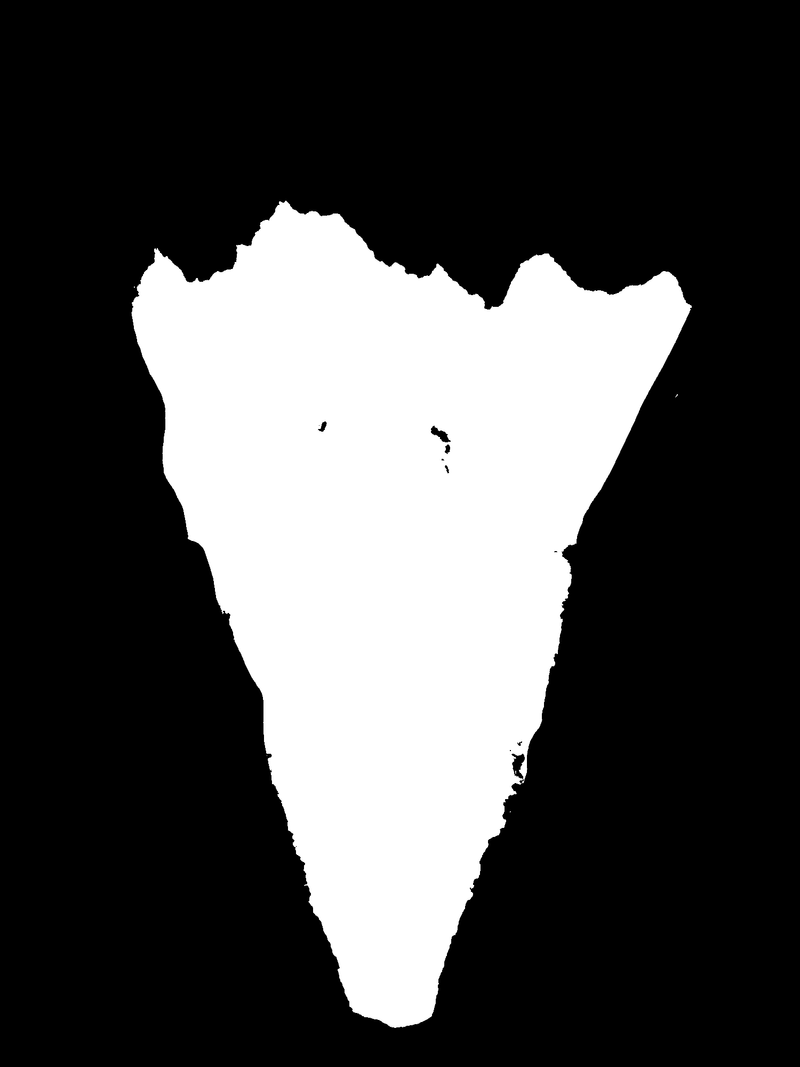
Scientific question
How can lava-fountain regions be identified consistently in video so that eruption parameters can be extracted quantitatively from field footage?
Why it matters
The pipeline is intended to enable quantitative extraction of eruption parameters from volcanic video recorded under variable lighting, viewing geometry, and field conditions.
Data and materials
- Kīlauea lava-fountain video, including footage from Episodes 49 and 50
- Video metadata, camera settings, and viewing-condition notes
- Observational field notes
- Manually generated masks and selected frames
Methods
- U-Net segmentation models
- Frame selection and mask generation
- Metadata tracking and model-ready dataset organization
- Field videography and documentation
My contribution
- Developing the computer-vision pipeline
- Trained U-Net segmentation models to identify lava-fountain regions across changing lighting, viewing geometry, and field conditions
- Built a Python-based labeling and dataset-preparation system
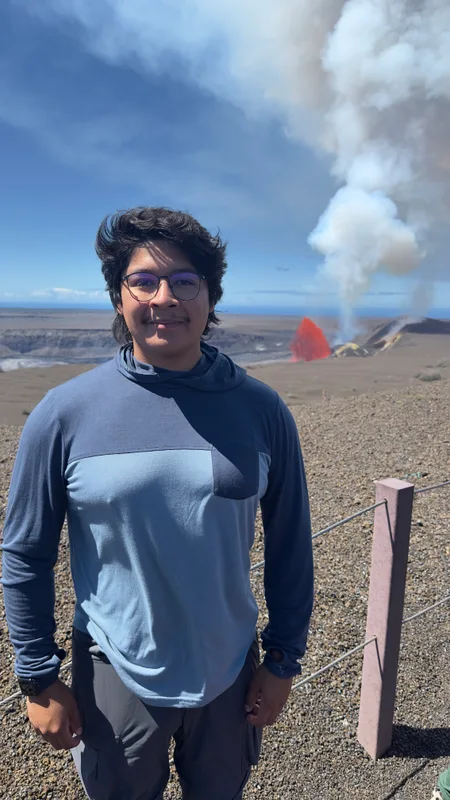
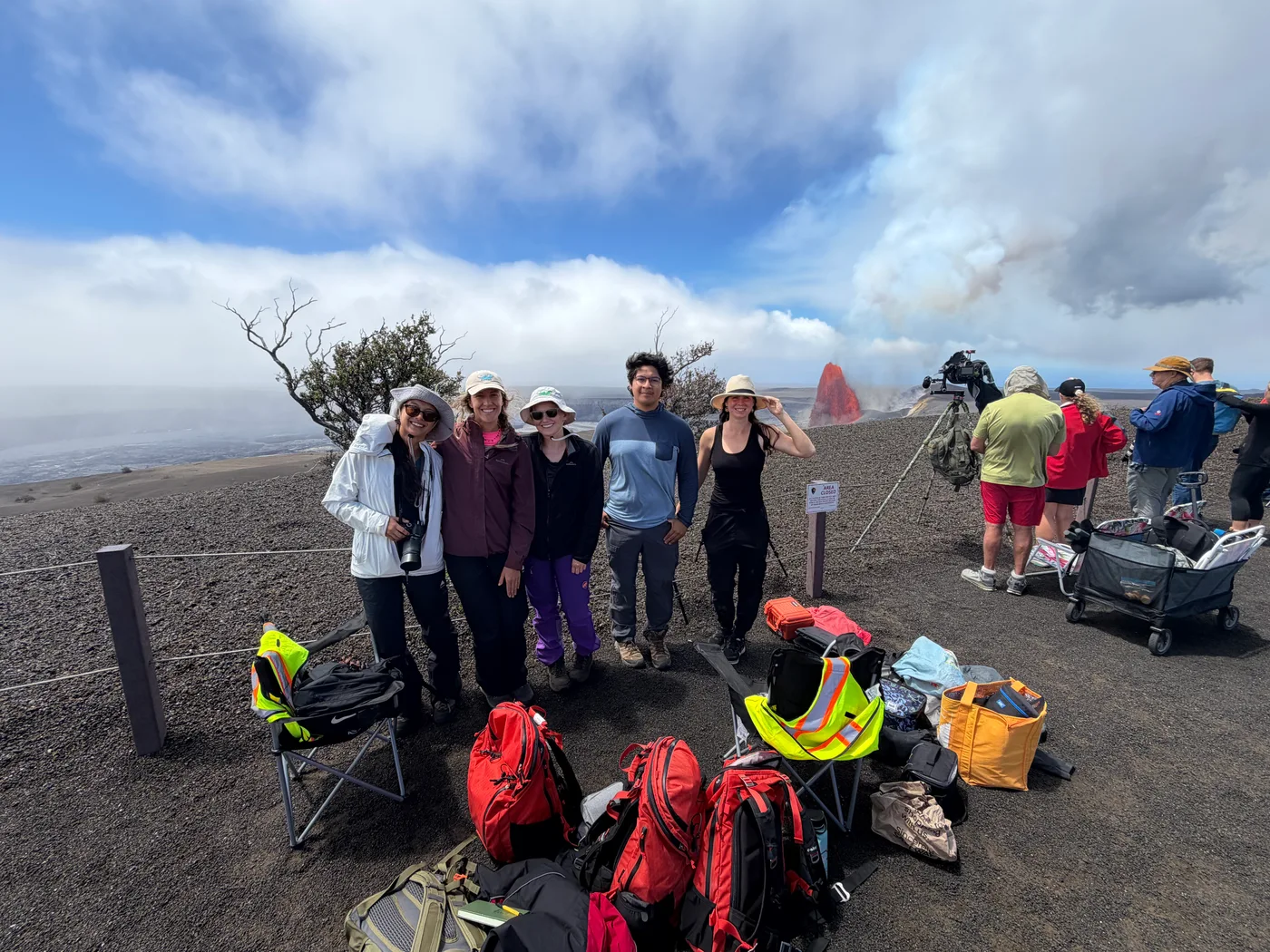
- Collected field footage for Kīlauea Episodes 49 and 50
- Documented camera settings, viewing conditions, and observational notes
Current results
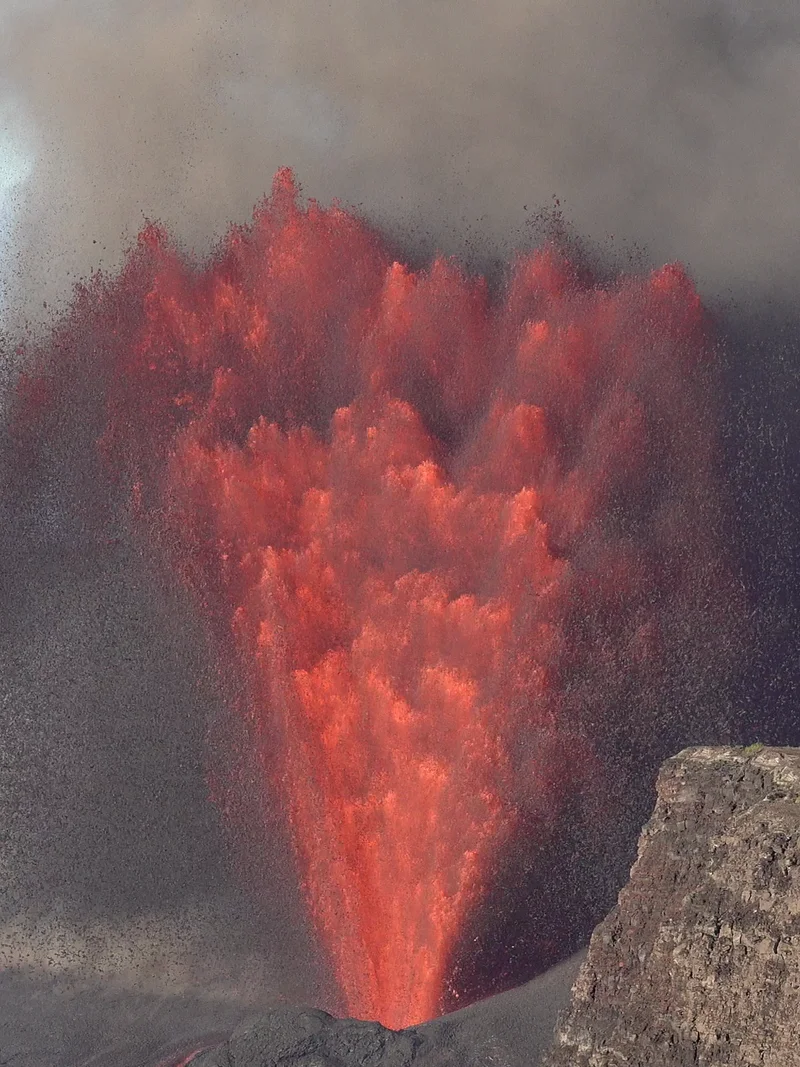
U-Net models have been trained to identify lava-fountain regions across changing lighting, viewing geometry, and field conditions.
AGU 2026 Abstract
Investigating the spatial and temporal variability of lava fountains using video analysis provides important constraints on eruption dynamics and shallow conduit processes. However, extracting quantitative measurements from video records consistently and efficiently remains challenging. In this project, we aim to develop a computer vision pipeline that automatically identifies and segments the active rising regions of lava fountains in videos, enabling standardized and reproductible measurements of eruptive parameters such as fountain heights, projected areas, and instantaneous eruption rates. The 2024-2026 Kīlauea eruption offers an excellent opportunity to train a machine learning model due to its exceptionally well-documented and frequent episodic activity. For the first time, continuous 24/7 webcam coverage, timelapse imagery, and extensive 4K footage were collected simultaneously during a Kīlauea eruption. These datasets record a suite of variable conditions throughout the eruption, such as changes in fountain geometry, lighting, weather, and gas obscuration. We manually annotated over 1000 frames to train a 2.5D U-Net++ segmentation model. The trained model autonomously segments active lava fountain regions regardless of viewing conditions. By applying the model across full videos, we can extract eruptive parameters at a higher temporal resolution than is practical with manual analysis. We validate this model against manually extracted eruption parameters for Episode 27 and compare the accuracy, efficiency, and temporal resolution of the machine learning approach with manual analysis. This methodology establishes a scalable framework for converting eruption video into reproducible quantitative datasets of lava fountaining and supports future monitoring and scientific investigations at Kīlauea.